


What Testing Film Stocks Actually Teaches You

Film stock tests are often treated as a technical exercise. A chance to compare grain, contrast curves, latitude and colour response. Charts are generated, frames are frozen, and conclusions are drawn from still images pulled out of context.

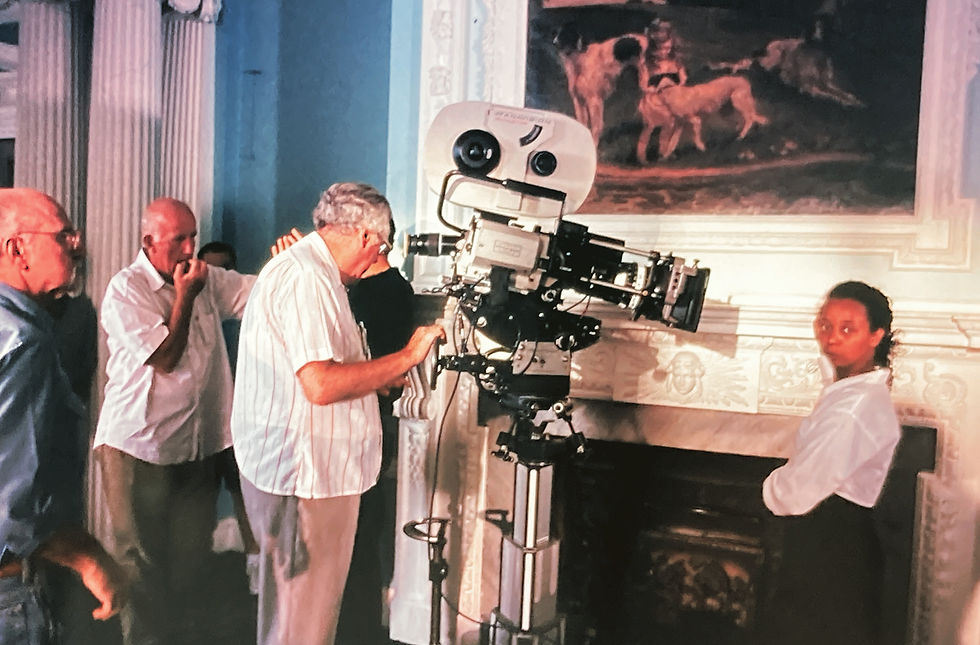
BTS photo from a ‘real world’ stock test I did.
That kind of testing has its place, but it only scratches the surface.
What a film stock really teaches you reveals itself over time, and often away from the test bench. It emerges in motion, in faces, in how the image holds together under pressure. It teaches you less about numbers and far more about behaviour.
One of the first things a proper stock test exposes is how a film responds to light, not just exposure. Two stocks can be rated at the same speed and exposed identically, yet behave very differently when pushed, shaped or allowed to fall away. Some stocks reward restraint, others tolerate aggression. Some feel happiest living in the mid-tones, others come alive when allowed deeper shadows or brighter highlights.
This isn’t something you discover by pointing a camera at a colour chart.
Stock testing also sharpens your eye for relationships rather than absolutes. You stop asking whether something is “correctly exposed” and start asking whether it feels right. A face, a sky and a background may all sit within acceptable exposure, but how they relate to one another is what determines whether the image has depth and coherence.
In that sense, testing becomes less about choosing a stock and more about understanding your own instincts. It reveals what you respond to as a cinematographer — how much contrast you like, how much texture you’re comfortable with, where you prefer information to fall away. Over time, you begin to recognise patterns in your choices.
Another thing testing teaches is patience. Film does not reward haste. You learn to make decisions deliberately, to commit, and to trust those decisions. Because there is a cost — in time, stock and process — you pay closer attention. You light with more intention, you shoot less waste, and you watch more carefully.
Perhaps the most valuable lesson stock testing offers is that film stocks are not interchangeable. Each one has a personality. Not in a romantic sense, but in a practical one. Some stocks are forgiving, some are demanding. Some flatter skin effortlessly, others require careful handling. Knowing these traits doesn’t just help you choose the right stock — it helps you design the lighting, the schedule and even the mood of a shoot around it.
None of this is anti-digital. Many of the lessons learned through testing film translate directly to digital work. Understanding behaviour, relationships and restraint improves cinematography in any format. The difference is that film insists you learn these lessons rather than allowing you to bypass them.
In the end, stock testing teaches you far more than what a stock looks like. It teaches you how you see, how you work, and how images are built — not in theory, but in practice.
Mark


Comments